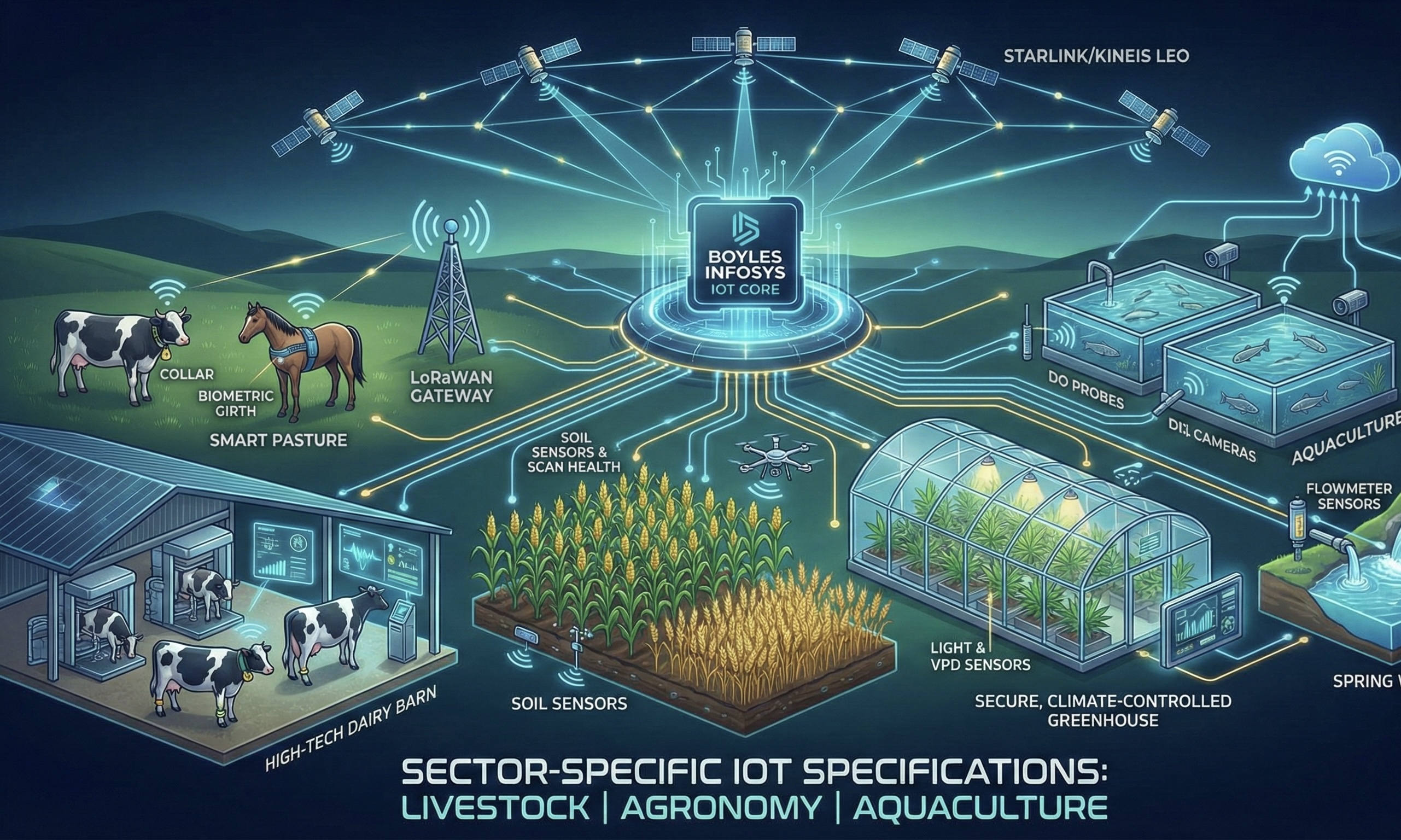
In 2026, livestock management has evolved from “boots-on-the-ground” observation to a data-driven science. The Internet of Things (IoT) now offers a comprehensive ecosystem that bridges the gap between animal biology and digital oversight, primarily to increase yield, ensure animal welfare, and optimize labor.
Digi International
Below is a breakdown of the current IoT offerings and their impact on modern ranching and dairy farming.
1. Smart Wearables (The “Fitbit” for Animals)
Wearable devices are the most mature segment of livestock IoT. These are typically neck collars, ear tags, or leg bands equipped with multi-axis accelerometers and physiological sensors.
Cavli Wireless
- Health Monitoring: Sensors track vitals like heart rate, respiratory rate, and rumen temperature.
TagoIO - Behavioral Analysis: AI algorithms analyze movement to identify “estrus” (heat), grazing duration, and rumination time. A sudden drop in activity often triggers an early illness alert days before physical symptoms appear.
[x]cube LABS+ 1 - Bolus Sensors: For cattle, internal “smart boluses” are swallowed and reside in the reticulum to provide highly accurate internal temperature and pH readings, essential for detecting metabolic disorders like acidosis.
2. Precision Location & Geofencing
Traditional fencing is expensive and static. IoT solutions provide a flexible alternative:
- GPS Tracking: Real-time location data transmitted via LoRaWAN (Long Range Wide Area Network) or satellite (for remote range-land).
GAO Tek - Virtual Fencing: Farmers can draw boundaries on a tablet. If an animal approaches the limit, the collar emits a warning sound or a mild vibration, training the herd to stay within the “virtual” pasture.
Digi4Live - Anti-Theft: Immediate alerts are sent if an animal moves outside a designated zone at unusual speeds, suggesting it has been loaded onto a vehicle.
3. Environmental & Facility Monitoring
For indoor livestock (pigs, poultry, and dairy barns), the environment is as critical as the animal’s health.
| Offerings | Purpose | Impact |
| Gas Sensors | Monitor Ammonia (NH3) and CO2 levels. | Prevents respiratory distress and improves air quality. |
| Smart Climate Control | Automated fans and misting systems. | Reduces heat stress, which can drop milk production by 50%. |
| Water/Feed Levels | Ultrasonic sensors in silos and troughs. | Automates re-ordering and ensures constant access to resources. |
4. Reproductive & Birthing Support
IoT has significantly reduced mortality rates during calving and lambing.
GAO Tek
- Calving Sensors: Tail-mounted sensors detect the specific movement patterns associated with the onset of labor.
TagoIO - Remote Alerts: The system sends a text message to the farmer, allowing for “just-in-time” intervention, reducing the need for 24/7 manual supervision during birthing seasons.
5. Satellite & Connectivity Solutions (The 2026 Edge)
The biggest hurdle—connectivity in remote areas—has been largely solved by LEO (Low Earth Orbit) satellite constellations (like Starlink or Kinéis).
TagoIO
- Global Coverage: Even in “white zones” with no cellular service, IoT tags can now ping data to satellites.
Kinéis - Low Power: Modern sensors are designed to last 5–10 years on a single battery, meaning a tag applied at birth can last the animal’s entire productive life.
Key Trend: Integration with Blockchain. By 2026, IoT data is increasingly being used to create “Digital Passports” for livestock, providing verified proof of health, origin, and antibiotic-free status to consumers and regulators.
Implementation Best Practices
- Start Small: Begin with a high-value group (e.g., breeding cows or sick-pen animals).
- Check Interoperability: Ensure your sensors use open protocols (like MQTT or HTTP) so they can “talk” to your existing farm management software.
- Data Security: Use platforms with multi-factor authentication (MFA) to protect your herd data from cyber threats

